
Overview ➣ We have explored whether domain privacy is worth the cost for website owners. We’ve broken down the pricing of domain privacy services and highlighted the benefits, such as protecting personal information, reducing spam, and improving security.
When purchasing a domain name, many website owners wonder whether domain privacy is worth the cost.
Domain privacy, also known as WHOIS protection, is a service that shields your personal information from being publicly displayed in the WHOIS database.
Without it, your name, email address, and phone number are exposed to the public, making you a target for spam, identity theft, and even phishing attacks.
While domain privacy comes with an additional fee, the benefits often outweigh the price, especially when it comes to safeguarding your online presence.
This added protection can prevent unwanted solicitations, reduce the risk of cyber-attacks, and maintain your anonymity online.
This openness can expose you to spam, identity theft, and unwanted solicitations.
Domain privacy services, often offered by domain registrars, can help protect this sensitive information by replacing it with the contact details of a proxy service.
However, these services come at an additional cost, and many domain owners wonder if the benefits outweigh the price.

In this article, we’ll break down the cost of domain privacy, the potential risks of not having it, and how it can enhance your website’s security.
Discover why investing in domain privacy may be a smart decision for both personal and business websites in today’s increasingly digital world.
What is Domain Privacy?
Domain privacy (also called WHOIS privacy) is a service that keeps your personal information hidden when you register a website domain.
When you register a domain (like www.yourwebsite.com), the registration information, including your name, email, address, and phone number, gets publicly listed in a directory called WHOIS.
This is to help people find out who owns a domain or contact them for various reasons.
However, many people don’t want their details visible to anyone on the internet. So, domain privacy steps in to protect your information.
Instead of showing your real contact details, the domain privacy service puts the contact information of a proxy (a company or service) in place.
That way, if someone wants to contact you about your domain, they reach the proxy first, not you directly.
This helps protect you from spam, unwanted solicitations, and potential scams while keeping your personal info private.
What is WHOIS? and How Does It Work?
WHOIS is a publicly accessible database that contains contact information for domain name owners.
When you register a domain, your details, such as name, address, phone number, and email, are stored in this database.
It helps identify the domain owner and can be used for communication or for verifying the authenticity of a website.
WHOIS stores the following information:
- Domain Name – The registered domain name (e.g., example.com).
- Registrant’s Name – The name of the domain owner.
- Registrant’s Contact Information – Address, phone number, and email of the domain owner.
- Registrar Information – The company that manages the domain registration.
- Registration Dates – The date the domain was registered and its expiration date.
- Nameservers – The servers that handle domain requests (DNS settings).
- Domain Status – Information about the domain’s status (e.g., active, expired, or on hold).
- Admin and Technical Contacts – Contact details of the people managing the domain, including technical support.
By default, ICANN adds this information to WHOIS, a publicly available database containing contact details for domain owners across the internet.
WHOIS is essential for domain transparency and accountability. WHOIS provides a way to track ownership and control over internet addresses.
Anyone can use a WHOIS lookup tool to access information about the owner of a website.
If you want to see any website’s information, you can see it by visiting any WHOIS lookup provider like WordPress.com
By visiting her,e you can enter the domain name and check the publicly available information for the particular domain.
For example, we will see Google.com’s domain information by visiting here-
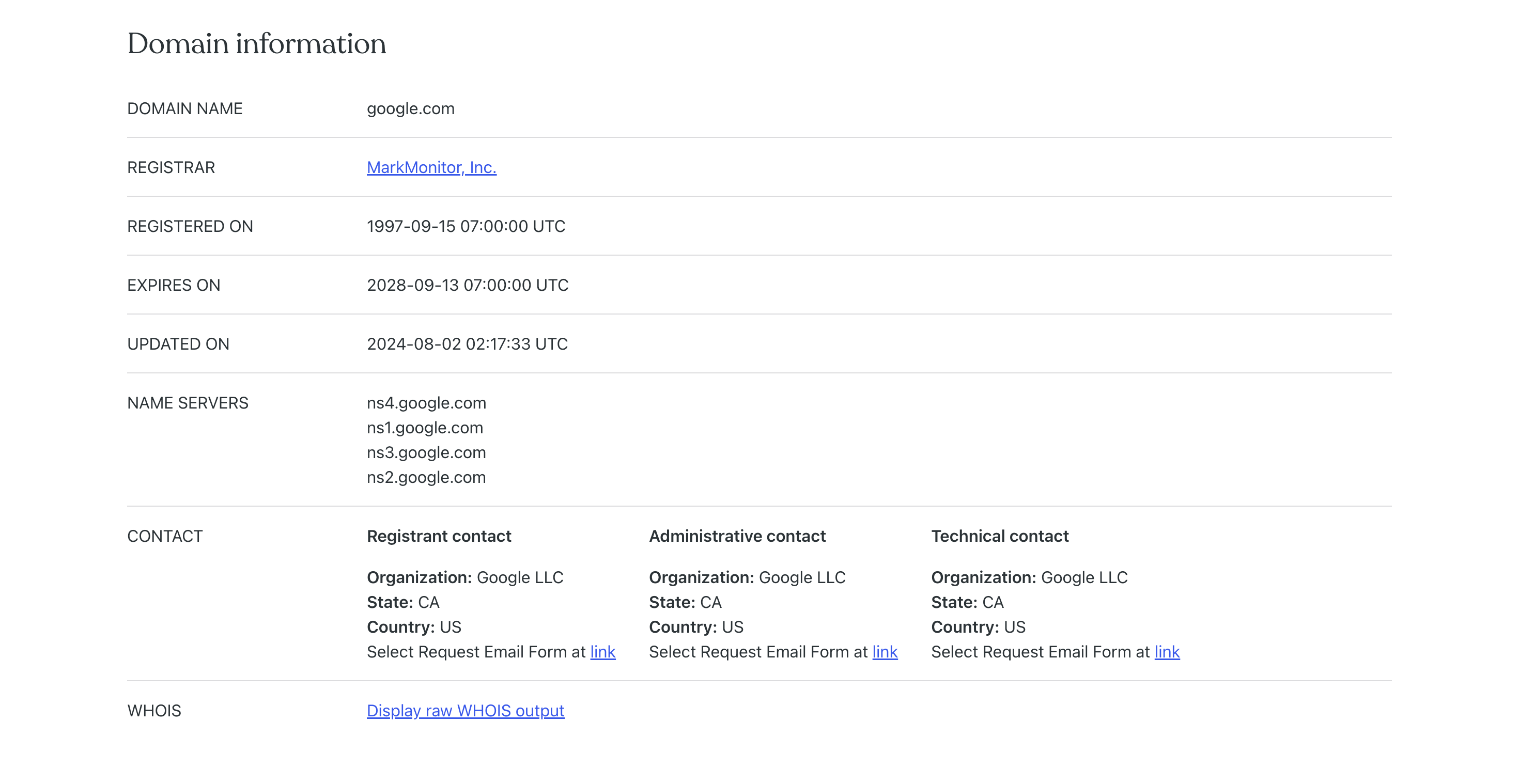
As you can see on the above screenshot about the domain information. Such as the domain registrar, the date of registration, expiry, and update dates.
WHOIS works by collecting and displaying personal and administrative contact information when you register a domain.
This information is available to anyone who wants to check the details of a domain. Anyone can access the WHOIS database to find out who owns a particular domain, when it was registered, and when it expires.
It helps ensure that domain owners can be contacted for legal or technical reasons, such as resolving disputes, preventing domain abuse, or verifying the legitimacy of a website.
The Importance of Domain Privacy
Protects Personal Information:
Domain privacy keeps your personal contact details hidden from the public WHOIS database, protecting you from unwanted exposure. Without it, your name, address, phone number, and email could be easily accessed by anyone on the earth.
Reduces Spam and Unasked Information:
By masking your personal information, domain privacy helps prevent spam emails, telemarketing calls, and other unwanted communication that could result from your details being publicly listed.
Ensure Security:
Keeping your domain information private can help protect you from cybercriminals and identity theft. Publicly available contact details can be exploited for scams, phishing, or hacking attempts.
Protects Domain Hijacking :
Domain privacy adds an extra layer of security to your domain ownership, making it harder for malicious actors to hijack or steal your domain by contacting the domain registrar through your personal details.
Know the Cost of Domain Privacy
Domain privacy (also known as WHOIS privacy or private registration) is a service that helps protect your personal contact information from being publicly visible in the WHOIS database when you register a domain.
Here’s a breakdown of the costs associated with it:
1. Typical Pricing or Range of Costs
On average, domain privacy costs anywhere from $5 to $15 per year. This price can vary depending on the registrar you choose.
- Low-end Pricing: Some registrars offer domain privacy for $5-$10 annually.
- High-end Pricing: Others may charge closer to $15 or more for privacy services.
2. Additional Charges from Registrars
Some registrars include domain privacy for free when you purchase a domain, so you don’t need to pay separately for this service.
For example, Namecheap and WordPress Domains may offer this as a free add-on with most domain registrations.
In contrast, some registrars charge an additional fee for domain privacy, which may be bundled with other services or offered as a standalone product.
For example, GoDaddy and Hostinger might charge a separate fee for privacy, and it’s not automatically included in the base price of the domain.
3. Some Hidden Costs
It’s essential to be cautious about hidden costs, especially after the first year.
Some registrars may offer a low price for the initial purchase of domain privacy, but their renewal prices can increase significantly after the first year.
For example, a domain privacy service might be offered at $5 for the first year, but then the renewal could jump to $15 or more.
We have seen this type of case with registrars like GoDaddy and Hostinger.
Some registrars also charge extra for advanced features linked to privacy, such as enhanced protection from domain hijacking or spam filtering. These features may come with an additional cost.
Comparison Among Popular Registrars:
When selecting a domain registrar, it’s essential to compare pricing, features, and services to find the best fit for your needs.
Here’s a table comparing popular registrars: Namecheap, WordPress.com, GoDaddy, Domain.com, and others.
| Registrar | Initial Price | WHOIS Privacy | Renewal Price | Hosting Plans |
|---|---|---|---|---|
| Namecheap | From $0.88 | Free (1st year) | Competitive | From $4.48/month |
| WordPress.com | $18/year | Free | Varies | Included with plans |
| GoDaddy | From $0.88 | $8.99/year | Higher after 1st year | From $11.99/month |
| Hostinger | $4.99/year | Free | Competitive | From $1.99/month |
| Name.com | $8.99/year | $8.99/year | Higher after 1st year | From $3.99/month |
Key Takeaways:
- Best for Budget: Namecheap, WordPress.com and Hostinger offer the most affordable domain registration and include WHOIS privacy for free.
- Best for Integrated Services: WordPress.com offer a comprehensive suite of services, including website builders and hosting.
- Renewal Pricing: Be aware of potential price hikes after the first year with services like GoDaddy and Domain.com.
Benefits of Domain Privacy
There are some useful benefits of having domain privacy for your business. Let’s know more about them:
- Prevents Domain Hijacking: By hiding your contact details, domain privacy makes it harder for malicious actors to gain unauthorized access to your account or transfer your domain to another registrar without your consent.
- Keeps Your Details Private: Domain privacy protects your personal information by masking it with generic contact details provided by the registrar.
- Protects Your Identity: If your contact information is publicly available, it can be used for fraudulent purposes, such as identity theft. Domain privacy shields you from this risk by keeping your personal details confidential.
- Prevents Spam: Without domain privacy, your contact details (such as name, email, and phone number) are publicly visible in the WHOIS database. This can lead to an influx of unwanted emails, phone calls, and spam.
- GDPR Compliance: In some regions, like the EU, GDPR regulations require protecting users’ personal data. Domain privacy can help ensure that your personal contact information is not exposed in violation of such regulations.
Who Should Consider Domain Privacy?
Small Business Owners:
If you’re running a small business, domain privacy helps protect both your personal and business contact information.
It shields your phone number and email from being publicly visible, which can prevent spam and unsolicited sales calls while maintaining your professional image.
Entrepreneurs and Startups:
Entrepreneurs who register a domain for their new ventures can protect their personal details from potential threats like identity theft, phishing scams, and domain hijacking.
It helps keep their focus on growing the business without worrying about privacy issues.
Bloggers and Content Creators:
Bloggers and content creators often register domains for their personal blogs or websites.
With domain privacy, they can keep their personal information hidden from the public eye, reducing the risk of harassment, unwanted communication, or other privacy concerns.
Anyone in Regulated Industries:
People involved in sensitive industries (e.g., healthcare, finance, law) may wish to keep their personal details private due to legal or compliance reasons.
Domain privacy ensures they comply with regulations like GDPR and protects their personal data from potential misuse.
Nonprofits and Advocacy Groups:
Nonprofit organizations and advocacy groups often want to shield their volunteers and staff from public exposure.
Using domain privacy helps prevent targeted attacks, threats, or harassment, which might occur if personal contact information were publicly available.
Is Domain Privacy Worth the Cost?
Yes, domain privacy is often worth the cost for many individuals and businesses. Domain privacy is generally worth the cost for most individuals and businesses.
For a relatively small annual fee, it provides significant protection by keeping your personal contact details hidden from the public, reducing the risk of spam, identity theft, and cyberattacks.
It also helps maintain a professional online presence and offers peace of mind, especially for those running businesses or sensitive sites.
While it may not be necessary for low-profile personal sites, the security and privacy benefits make it a worthwhile investment for most users concerned with protecting their information.
Our Take
For most users, especially those running a business, personal brand, or sensitive site, domain privacy is a small but crucial investment that offers substantial protection, security, and convenience.
It’s definitely worth considering as a smart way to safeguard your online presence.
More to Read:
- 8+ Best Cheap Domain Name Providers
- From .com to.org: Understanding Types of Domain Names
- Breaking Down: Hosting vs Domain
If you have any questions regarding anything, do not hesitate to just comment below, and we will help you to solve your problem. Thanks for reading this blog.
Please Subscribe to our YouTube Channel. We also upload great content there. Do follow us on Facebook and Twitter


